Ecole Tunon - How to Train Future Flight Attendants in In-Flight Sales with VR
The Context
The Tunon International School of Paris is part of the Tunon Group, which brings together 21 schools and trains more than 2,000 students in Paris, from post-secondary to Master’s-level programs, in aviation, tourism, hospitality, events, and luxury professions.
For future flight attendants, managing an in-flight sale is a key skill, but one that can be difficult to practice in the classroom. The CAP method (Characteristics, Advantages, Benefits), commonly taught to students to structure a sales pitch, most often remains a theoretical exercise built around tables, far removed from the real conditions of a flight and the stress management it requires.
The teaching team was therefore looking for a way to put students in realistic situations: managing the sale of multiple products on board, adapting to a customer's expressed needs, and repeating the exercise as many times as needed to build lasting reflexes.
The solution
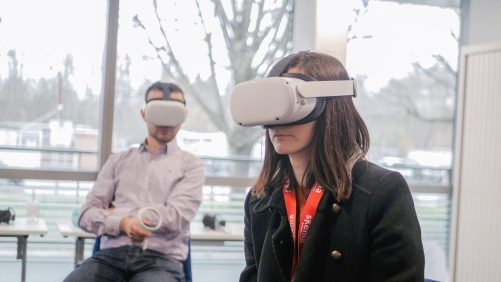
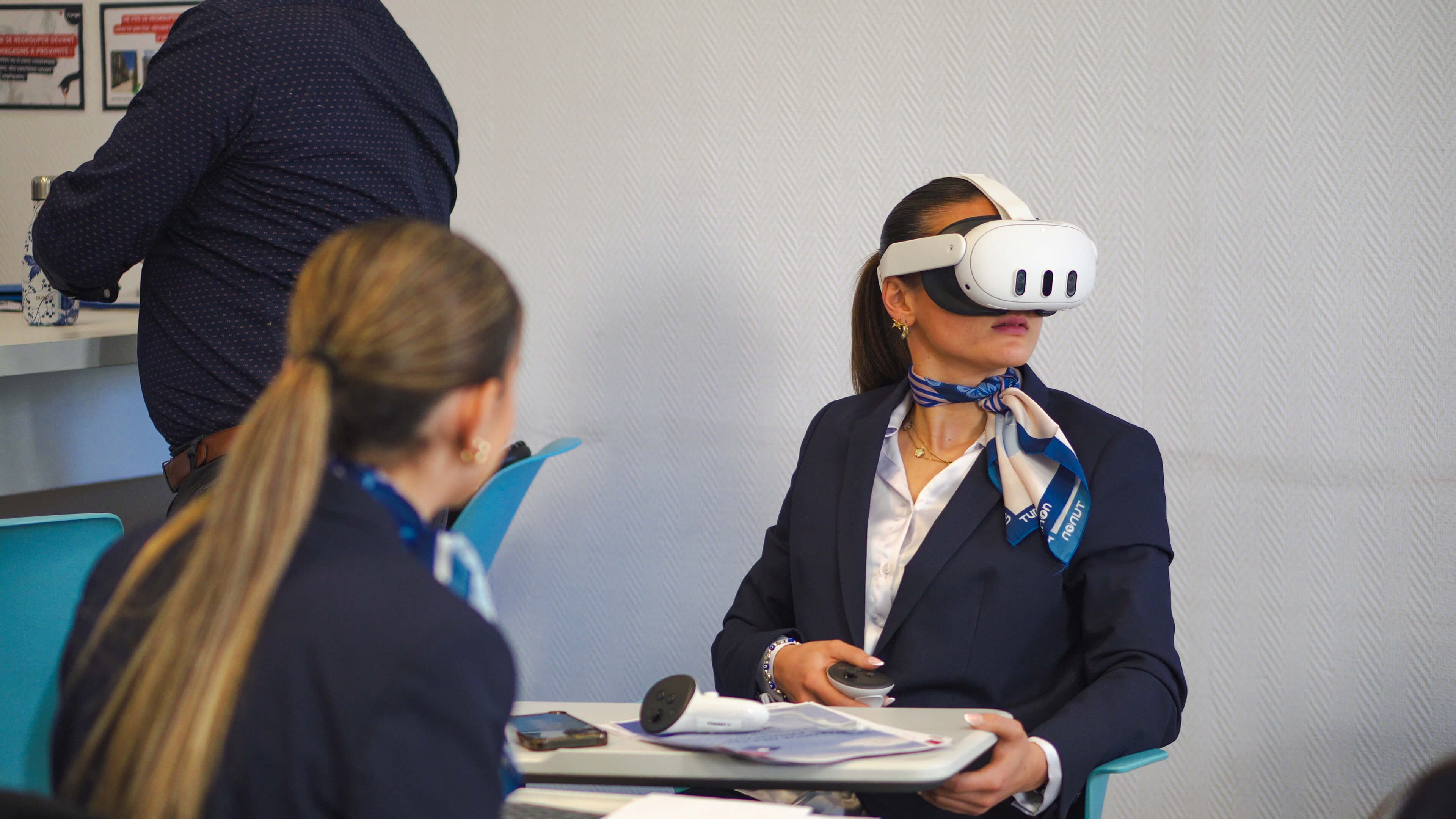
With Uptale, the school designed an immersive VR training experience that places students on board an aircraft, facing a sales situation they must manage from start to finish.
The exercise allows students to put the CAP method into practice in an immersive environment, using a VR headset rather than working on paper.
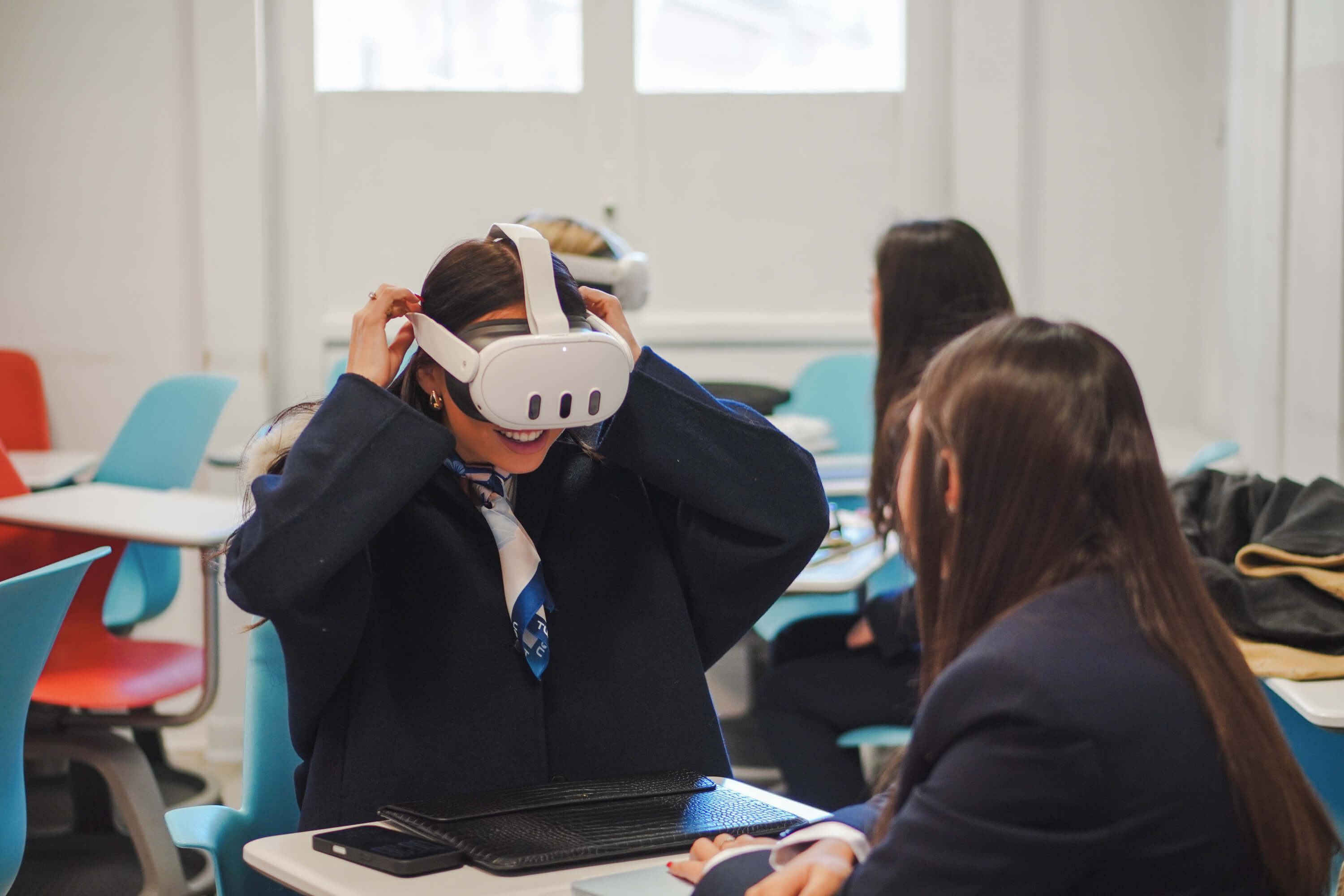
Two training modes were introduced: one using a VR headset and another accessible on a computer, allowing students to continue practicing outside of school.
Uptale's support allowed the teaching team to clearly define its needs and move fast: a few months were enough to design the exercise and deploy it on the platform. The interface also allows the school to quickly update and adapt its training modules to meet students' expectations.
The benefits
- Repetition to reinforce learning. Students can replay the exercise as many times as needed to master the method.
- Practical application of the CAP and SONCAS sales methods, until then confined to theoretical exercises.
- Stress management practiced under immersive conditions, in situations students can't necessarily anticipate in advance.
- A dual training mode, headset and computer, to extend learning beyond the school walls.
- Rapid deployment, made possible by close support and an interface that allows for frequent adjustments.
- The shift from knowledge to professional skill: the student doesn't just know a method, they know how to apply it, make decisions, and adapt their approach in a realistic situation.
"The support really helped us clearly define what we needed in order to move quickly, so that within a few months, we were able to get the exercise up and running on the platform."
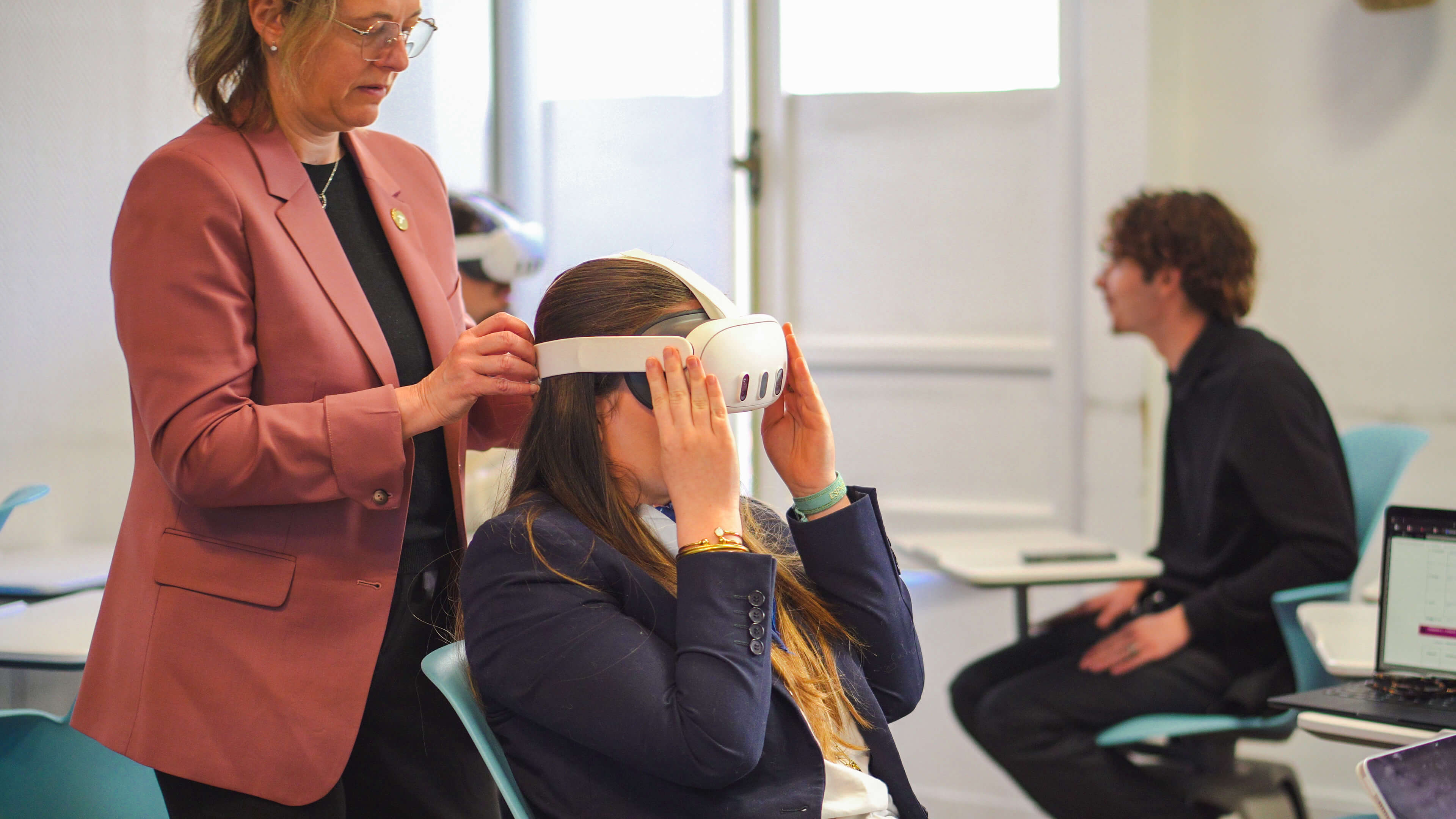
"It helped us learn to manage stress, to handle situations we might not necessarily expect."
Anna, student at the Tunon School of Paris
What's next?
First introduced at the Tunon International School of Paris, this module is intended to be rolled out across all 21 schools in the Tunon Group.
Have a similar training project?