
Meta's new lightweight XR headset: why it matters for enterprise training
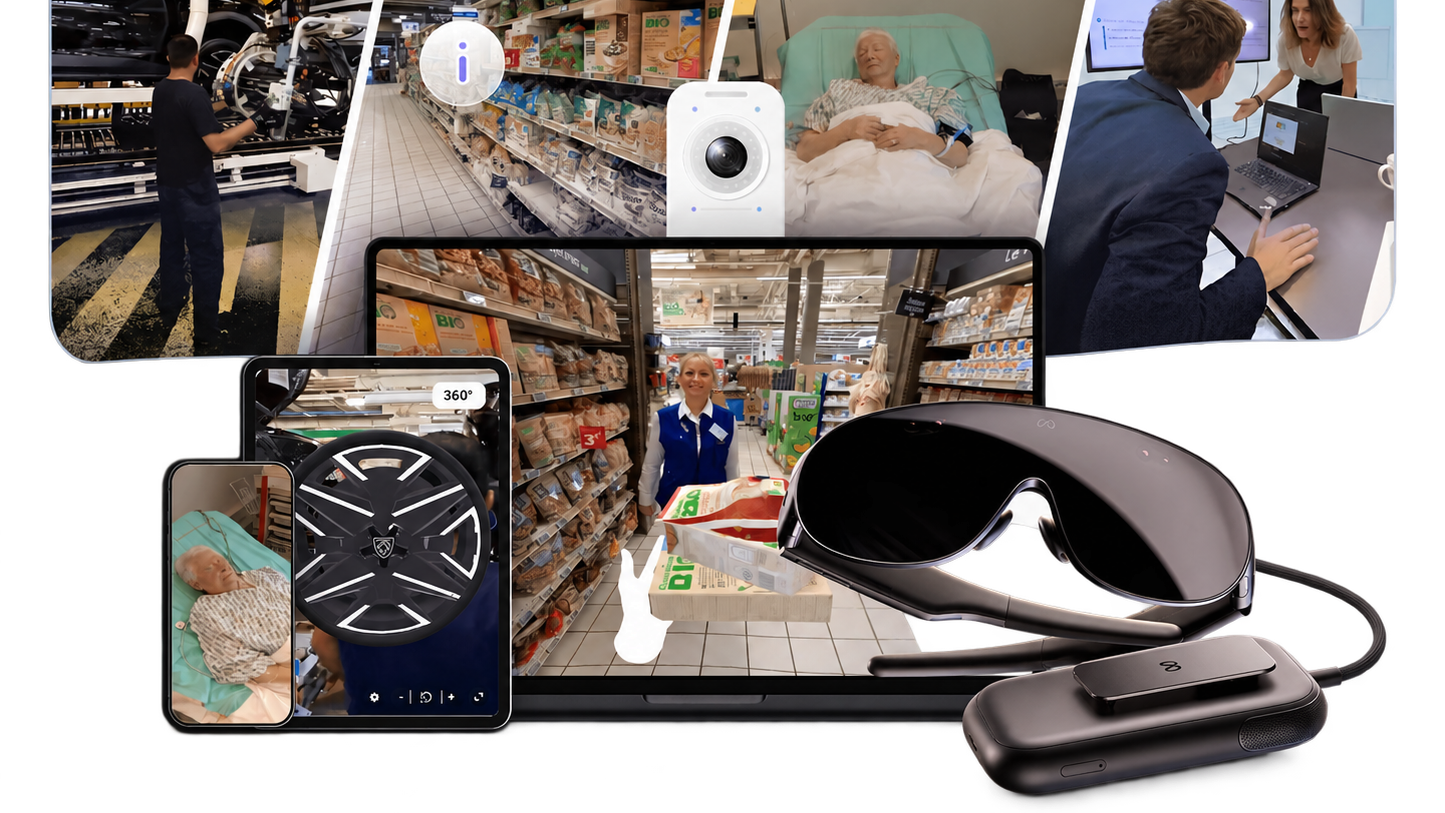
At Meta Connect on 23–24 September 2026, Meta unveiled Meta VR Glasses: a mixed reality headset that looks and feels like a pair of glasses. It weighs about 100 grams, roughly five times lighter than a Meta Quest 3, and is due in spring 2027.
This is not the screenless Ray-Ban Meta camera glasses. VR Glasses have real displays: 5K micro-OLED panels, full-colour stereoscopic passthrough and depth sensing. The processor and battery sit in a small puck worn on the body, connected to the glasses by a tether. That design is what makes the glasses so light.
For companies training their workforce with immersive learning, this is an important announcement. Here is why.
A strong signal for the XR market
The past two years felt like an "XR winter". Headset launches slowed, budgets moved to AI, and many observers wondered whether the big players would keep investing in immersive hardware.
Meta's answer is clear: it is still in the game. And this is not just a spec bump of an existing Quest. VR Glasses are a new category of device, built around a new form factor, a new split architecture and a new display generation.
For our clients, this is reassuring. The hardware ecosystem they rely on for immersive training is alive, funded and moving forward. Investing in immersive learning today means betting on a technology that its largest player keeps pushing, with more devices still to come.
What lighter XR means for enterprise training
A glasses-style headset removes many of the barriers we hear about from learners and training teams on the ground.
-
Easier to put on.
Glasses slip on in seconds. Less fuss with straps and adjustments means less friction before each session, especially for learners who have never used VR. -
Comfortable for longer.
At around 100 grams, the weight on the face and neck drops sharply. Longer sessions and back-to-back modules become realistic, without the fatigue of a heavier headset. -
Never cut off from the real world.
Full-colour passthrough keeps learners aware of their surroundings, trainers and colleagues. This reduces the feeling of isolation, reassures first-time users and opens the door to mixed reality exercises that blend virtual content with the real workstation. -
Higher visual quality.
5K micro-OLED displays with HDR bring sharper text, finer detail and more realistic 360° footage. For reality-based training, where learners must read a gauge, spot a defect or recognise a gesture, image quality matters. -
A format that fits the workplace.
A lighter, more portable device is easier to carry from site to site, store and deploy in a training room or on the shop floor. It also lowers the bar for acceptance among learners who find today's headsets bulky.
The more natural the device, the more people use it. And the more they use it, the faster immersive training delivers results.
Uptale and the Meta glasses family
Meta's wearables now cover two complementary uses, and Uptale is ready for both.
Capturing expertise with Ray-Ban Meta camera glasses.
Uptale is already compatible with Meta's camera glasses. Your experts can film their own gestures from a first-person point of view, hands free, while they work. That footage feeds our next P.O.V approach: learners see the task exactly as the expert sees it, step by step, at the real workstation.
This is only the beginning. This new Uptale feature will take even more advantage of these glasses to turn field know-how into training content. More on that very soon.
Delivering training on Meta VR Glasses. Uptale already runs on Meta Quest headsets used by our industrial clients. We are following VR Glasses closely and preparing our platform so that our clients can benefit from this lighter format when it reaches the market.
The future of immersive training is getting lighter
Meta VR Glasses show where the market is heading: devices that are lighter, sharper and more connected to the real world. For companies preparing their workforce, that means immersive training that is easier to deploy and easier to adopt.
Want to see how Uptale can help your teams get ready, on today's headsets and tomorrow's glasses? Contact our team for a demo.
Talk with Uptale about the procedure, environment or critical decision your teams need to master next.